Modernizing a Digital Gateway: The 1,500+ Page HCFL.gov Enterprise Transformation
Architecting a scalable, headless ecosystem to serve 1.5M residents across 40+ departments, replacing fragmented legacy debt with an intuitive, unified user experience.
Project at a Glance
Lead Content Strategist & UX Partner
Role: Principal Content Designer & Systems Architect
Timeline: 2022–2024Scale: 1,500+ Enterprise Pages | 40+ Departments | 1.5M Residents
The Shift: Legacy Modernization (Sitecore → Contentstack Headless CMS)
Team: Lead Strategist directing internal content specialists and cross-functional Engineering/Design partners
Tech Stack: Contentstack (Headless), Algolia (Search Intelligence), Cloudinary (DAM), Formstack, JSON Editors
Executive Summary
I architected the content strategy and governance frameworks for the end-to-end digital transformation of Hillsborough County’s enterprise ecosystem. Serving a population of 1.5M residents, this project required navigating high-stakes regulatory ambiguity and complex stakeholder silos across 40+ departments.
Over a two-year lifecycle, I led the transition from a monolithic legacy system to a headless architecture, implementing:
Scalable Content Models: Designed centralized JSON-based structures to ensure cross-departmental consistency.
Enterprise Information Architecture: Re-engineered site-wide navigation and search logic using Algolia to prioritize user findability.
Strategic Governance: Directed a comprehensive audit and migration of 1,500+ pages and 5,000+ documents, establishing new editorial standards that improved operational efficiency and ensured 100% WCAG accessibility compliance.
The result was a modern, inclusive digital gateway that transformed how a major metropolitan government delivers services to its citizens
01 — Project Overview: Strategic Modernization
Between 2022 and 2024, I architected the digital transformation of Hillsborough County’s primary resident portal, transitioning from a monolithic legacy system to a modern, headless ecosystem. As the Lead Content Strategist and Systems Architect, I directed the end-to-end overhaul of the 1,500+ page enterprise site, ensuring trust and transparency for a population of 1.5 million residents.
This multi-year initiative required high-stakes orchestration of content, technology, and people, focusing on:
Systems Architecture: Orchestrating a full-scale migration from Sitecore to a headless CMS (Contentstack) and Algolia search ecosystem.
Operational Governance: Designing centralized content models and automated workflows utilized by 30+ cross-functional departments.
User Experience & IA: Re-engineering site-wide navigation and information architecture to prioritize findability and service-based mental models.
Inclusive Design: Establishing organizational standards to ensure 100% WCAG/508 compliance across all digital touchpoints.
Stakeholder Leadership: Managing complex communication and alignment across 40+ departments and hundreds of enterprise stakeholders.
Technical Partnership: Collaborating with engineering to develop reusable modules, JSON-based templates, and intelligent search logic.
Change Management: Leading enterprise-wide training for new CMS editors while maintaining the continuity of the legacy legacy ecosystem during the transition.
The Impact
The transformation resulted in a high-performance digital gateway that significantly improved findability, reduced technical debt, and optimized operational efficiency for residents, businesses, and County employees alike.
02 — The Problem: Deconstructing Legacy Fragmentation
The legacy platform, HCFLGov.net, had evolved into a sprawling, disorganized digital ecosystem that prioritized internal department structures over resident needs. The site suffered from deep-seated technical and operational debt that hindered service delivery for 1.5 million users.
Key Architectural & Operational Challenges:
Fragile Navigation & UX: The interface relied on error-prone hover states and rigid hierarchies, creating high cognitive load and "interaction fatigue" for users seeking critical services.
Search Failure & Data Silos: Site search was unreliable, with results highly sensitive to capitalization and metadata inconsistencies, rendering vast amounts of information "unfindable".
Decentralized Content Governance: A lack of clear ownership led to fragmented updates across 40+ departments, resulting in a disjointed brand voice and conflicting information.
Redundant, Outdated, and Trivial (ROT) Content: Document libraries were severely bloated with thousands of redundant or obsolete PDFs, complicating both the user journey and the migration effort.
Technical Bottlenecks (The "Staging Gap"): The absence of a staging environment meant stakeholders could not preview content, forcing a "publish and pray" workflow that increased the risk of public-facing errors.
Platform Friction: The legacy Sitecore instance featured heavy, inefficient workflows that slowed production and discouraged frequent, necessary updates from department editors.
Accessibility & Compliance Risks: Inconsistent content standards led to significant gaps in WCAG/508 compliance, creating barriers for residents with disabilities and increasing legal exposure.
The Mandate
The County didn’t just require a visual redesign; it required a total Service Design overhaul. We needed to build a new content system, a scalable governance model, and a resilient framework for maintaining digital services at the enterprise level.
03 — My Role: Strategic Orchestration & Systems Leadership
As the Lead Content Strategist and Systems Architect, I directed the pillars of content strategy, information architecture (IA), and enterprise governance throughout the HCFL.gov transformation. I acted as the primary bridge between engineering, design, and 40+ departmental stakeholders to ensure a unified digital ecosystem.
Content Strategy & Audit Architecture
Audit Framework Design: Engineered and executed a comprehensive 7-month audit lifecycle across 40+ departments, implementing structured workflows and audit templates to standardize data collection.
Strategic Oversight: Led cross-functional kickoff sessions and managed complex content lifecycles, ensuring high-impact areas met new enterprise standards while maintaining legacy site continuity in Sitecore.
Information Architecture & Global Navigation Strategy
Data-Driven IA: Directed all content-side IA decisions, re-engineering Level 2 navigation and taxonomy groupings to prioritize service-based mental models.
UX Advocacy: Successfully advocated for and implemented major architectural pivots, including the creation of high-impact "Seniors" and "Health Care Plan" sections to improve findability for vulnerable populations.
Taxonomy Modernization: Evolved legacy labeling (e.g., Social Services → Human Services) to align with modern user expectations and plain-language standards.
Headless CMS Implementation & Migration Systems
Platform Procurement & Design: Partnered in the CMS procurement process and designed the foundational folder structures, JSON content models, and naming conventions for the move to Contentstack.
Migration Operations: Orchestrated the strategic cleanup and multi-phase migration of 5,000+ enterprise documents and 1,500+ pages, reducing technical debt and ROT (Redundant, Outdated, Trivial) content.
Component Development: Collaborated with engineering to develop reusable content modules and documented new editing workflows to ensure long-term system scalability.
Stakeholder Leadership & Change Management
Enterprise Alignment: Managed communication and feedback loops for 40+ department groups, facilitating staging reviews and executive-level content clarifications.
Operational Resilience: When the team transitioned to a solo-coordinator model in early 2023, I maintained dual-platform operations, ensuring zero downtime for the legacy ecosystem while simultaneously architecting the new build.
04 — The Approach: Pillar 1
Strategic Enterprise Content Audit & Governance
I engineered a scalable, 7-month audit framework to modernize the County's legacy content debt. This process moved beyond simple inventorying to establish a new standard for Content Quality and Lifecycle Management.
Framework Architecture: Designed a standardized audit methodology including stakeholder questionnaires and data-gathering templates to ensure consistent inputs across 40+ siloed departments.
Stakeholder Orchestration: Identified and aligned key department leads, facilitating high-level kickoff sessions to define content ownership and strategic goals.
Lifecycle Management: Directed the review and categorization of 1,500+ pages, identifying ROT (Redundant, Outdated, Trivial) content for deletion versus high-value assets for migration.
System Continuity: Maintained the legacy Sitecore ecosystem in parallel with the new build, ensuring zero service interruptions for 1.5M residents during the transition.
Migration Readiness: Standardized and formatted all audited content for seamless ingestion into the Contentstack headless CMS.
Operational Resilience
Midway through the lifecycle, I pivoted to lead the entire process as the sole content coordinator, maintaining project velocity and executive timelines without compromising the quality of the 1,500-page migration.
Pillar 2 — Strategic Information Architecture & Taxonomy Redesign
I architected a service-oriented Information Architecture (IA) designed to reduce cognitive load and prioritize high-intent resident needs. By moving away from an org-chart-based structure, I transformed the navigation into a modern, user-centric gateway.
Evidence-Based Navigation: Directed the content-informed structural design of the Level 2 navigation, focusing on discoverability and service-based mental models.
Strategic Consolidation: Identified and architected a dedicated "Seniors" ecosystem, centralizing previously fragmented high-value content to serve a critical demographic.
Service Elevation: Spearheaded the creation of a top-level "Health Care Plan" portal, elevating a high-traffic service that was previously buried within legacy hierarchies.
Taxonomy Modernization: Led the linguistic shift toward plain language and modern intuitive labeling (e.g., Social Services → Human Services; Citizens → Community Resources) to improve resident comprehension.
Executive Advocacy: Defended architectural pivots in executive-level forums, using user-centered logic to gain stakeholder buy-in for radical structural improvements.
Seniors: From Fragmentation to a Unified Ecosystem

The Problem: Originally buried as a Level 3 page, critical senior resources were scattered and difficult for a vulnerable demographic to navigate.
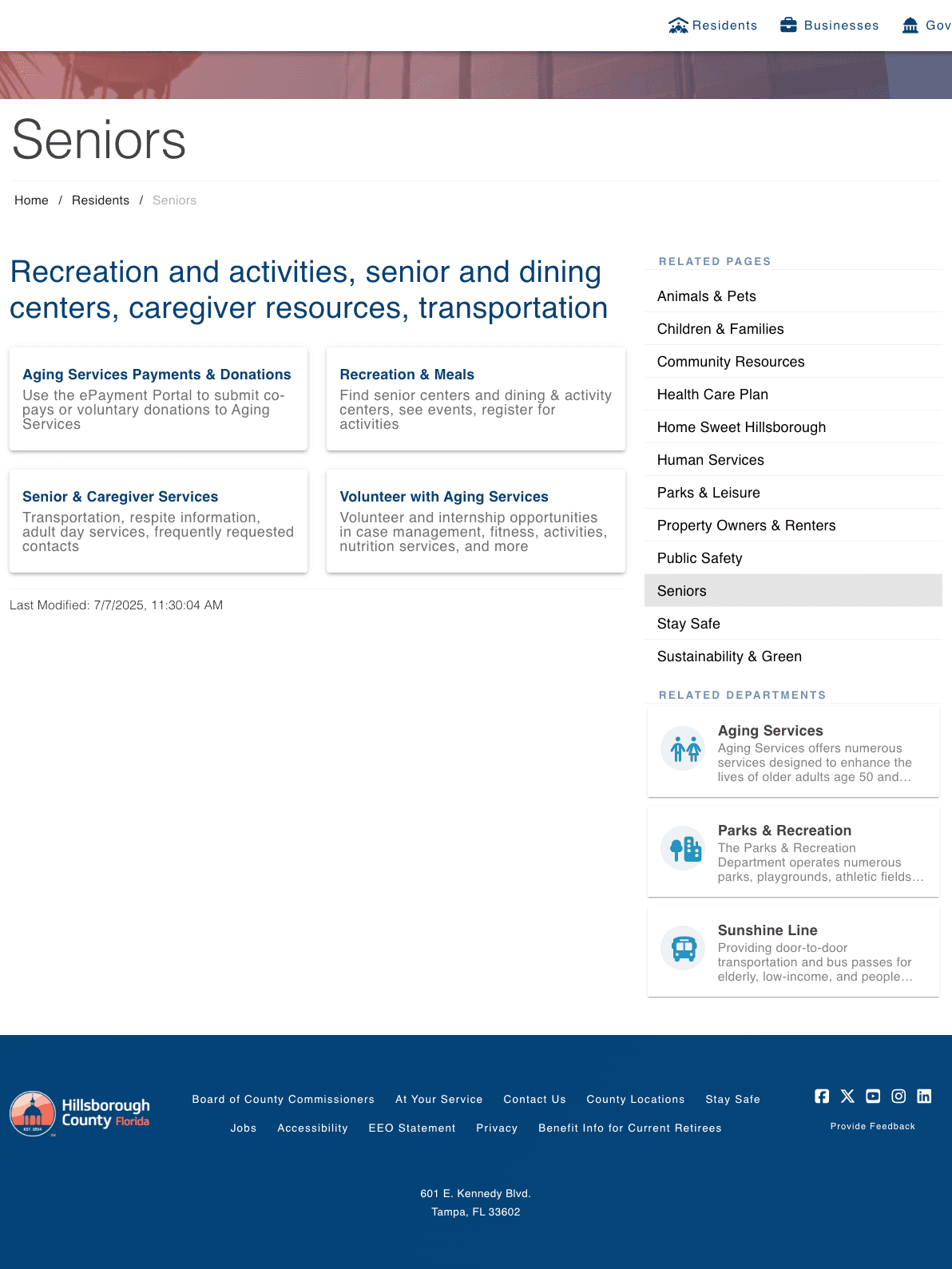
The Architectural Shift: Elevated Seniors to a Level 2 destination, centralizing fragmented content into a truly unified section that reduces the number of clicks to find essential information.
Health Care Plan: Elevating High-Intent Services
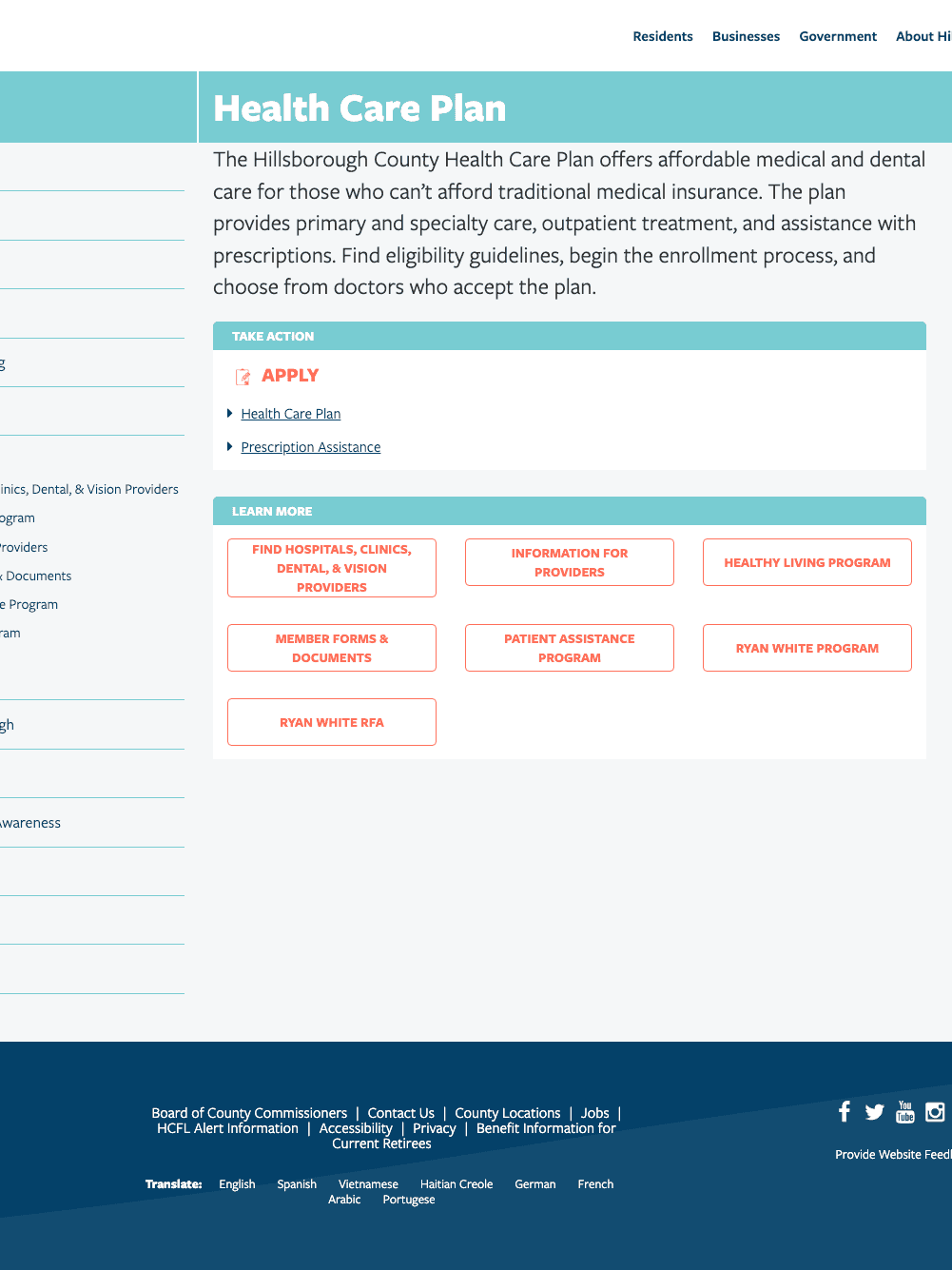
The Problem: As a premier County program, the Health Care Plan was counter-intuitively buried within "Social Services," hiding it from the residents who needed it most.
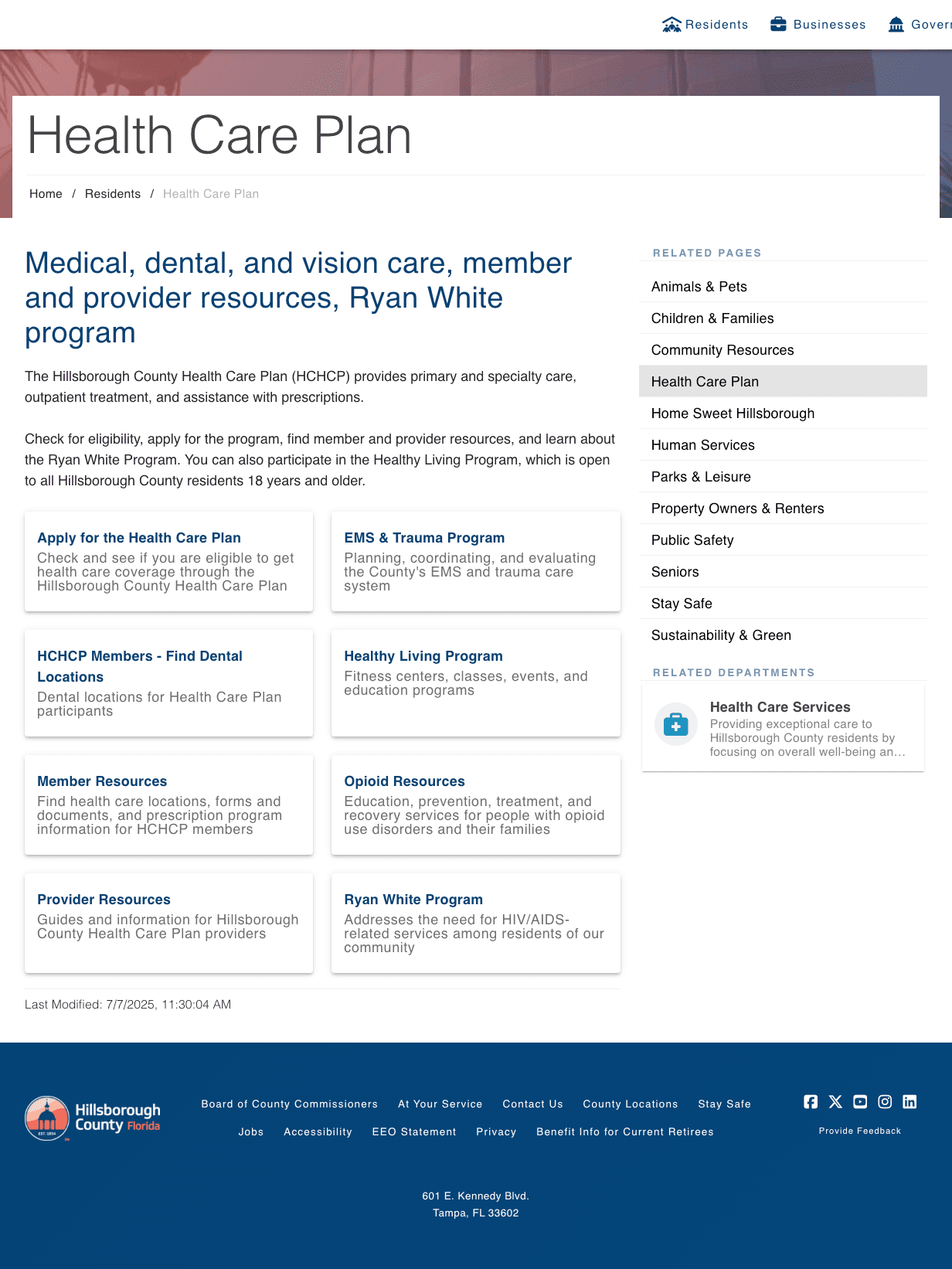
The Architectural Shift: Identified this as a high-traffic priority and elevated it to a Level 2 page with increased visibility, befitting its status as a critical community resource.
Human Services: Taxonomy Modernization for Inclusive Design
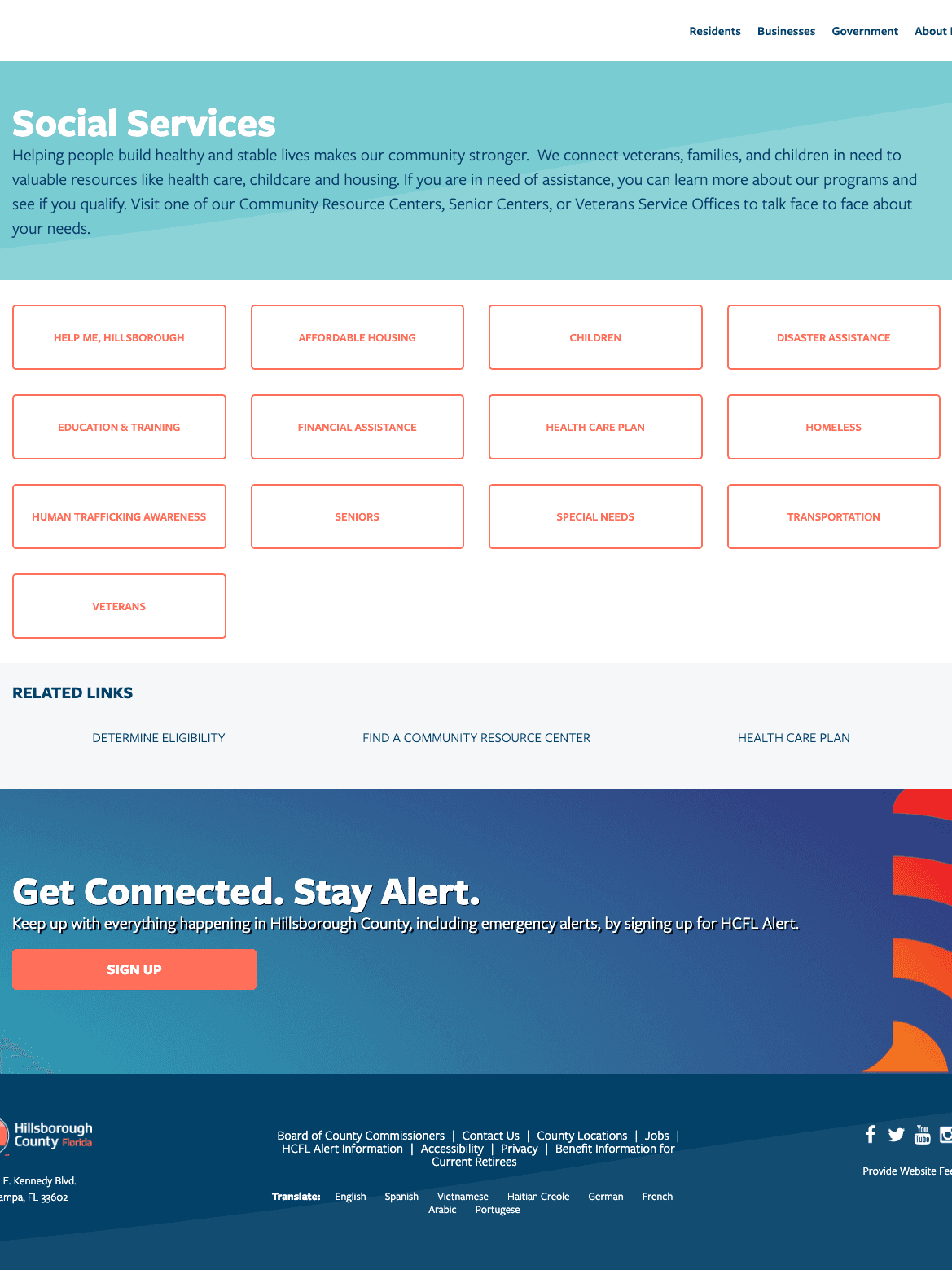
The Problem: The legacy "Social Services" label carried institutional weight but lacked the inclusive, modern clarity required for a diverse resident population.

The Architectural Shift: Spearheaded the linguistic transition to Human Services, using more inclusive and relevant naming conventions to improve user comprehension and brand trust.
Community Resources: Aligning with User Mental Models

The Problem: The "Citizens" landing page used an outdated, exclusionary label that didn't accurately reflect the breadth of services provided to the entire community.

The Architectural Shift: Re-engineered the section as Community Resources, modernizing the taxonomy to be more intuitive and welcoming for residents, businesses, and visitors alike.
Pillar 3 — Strategic Migration & Technical Governance
This phase focused on the selection of a modern tech stack and the high-stakes migration of enterprise assets. When a primary technical solution failed, I architected the emergency recovery plan to ensure project continuity and system integrity.
Platform Procurement & Evaluation
Systems Selection: Partnered in the year-long CMS procurement lifecycle, evaluating platform capabilities through the lens of long-term governance and content scalability.
Architectural Alignment: Ensured the selected headless environment (Contentstack) supported the complex permission structures required for 40+ departments.
Emergency Migration & Document Architecture
Crisis Management & Technical Pivot: When the initial asset management solution (Cloudinary) proved unstable for the County’s massive document library, I led the emergency strategic pivot to migrate assets into Contentstack.
Redundant, Outdated, and Trivial (ROT) Remediation: Engineered a document cleanup strategy that successfully identified and removed ~2,000+ unnecessary PDFs, drastically reducing technical debt.
Structural Engineering: Designed the global folder architecture and standardized naming conventions to ensure a scalable, searchable repository for 5,000+ enterprise documents.
Workflow Design: Collaborated with the development team to design the new editorial experience, creating intuitive document management workflows for hundreds of CMS editors.
Pillar 4 — Migration Execution & Systems Troubleshooting
The final execution phase in Contentstack coincided with a major global platform update that introduced significant technical regressions. I acted as the primary bridge between the content team and engineering, architecting workarounds to maintain project momentum despite severe system instability.
Navigating Platform Regressions
Crisis Management: When a major UI update in Contentstack disabled core editing functionality (including broken formatting, disappearing links, and grayed-out content), I stepped in to lead the recovery effort.
Technical Troubleshooting: Identified and documented critical bugs—such as backend-to-staging mismatches and inconsistent Cloudinary API outputs—to provide engineering with clear, actionable data for resolution.
Operational Workarounds: Designed and implemented temporary "stop-gap" workflows and JSON-level fixes that allowed the content team to continue their work, preventing a total project stall.
Stakeholder Transparency: Managed executive expectations as technical blockers pushed the enterprise launch from August to January, providing clear reporting on system status and recovery timelines.
Efficiency & Quality Control
Systems Optimization: Despite platform friction that initially increased simple edit times to nearly an hour, I refined the ContentOps workflow to recapture efficiency as stability returned.
Technical Documentation: Authored a suite of temporary fix-it guides and troubleshooting protocols to ensure consistency across 40+ departmental editors during the period of instability.
Pillar 5 — UX, Search Intelligence & Inclusive Design
The final pillar focused on the "Service" in Service Design—ensuring that the massive architectural changes translated into a frictionless experience for 1.5M residents. I led the efforts to modernize search logic and enforce accessibility standards across the enterprise.
Search Intelligence with Algolia
Algolia Implementation: Directed the transition to Algolia’s AI-powered search ecosystem, instantly resolving a decade of technical debt associated with Sitecore’s legacy search.
Semantic Search & Filtering: Eliminated case-sensitivity issues and "zero-result" failures by implementing intelligent filtering and relevant indexing, ensuring residents could find critical services regardless of the terminology used.
Navigation & Layout Engineering
Sticky Information Architecture: Introduced "sticky" Level 2 navigational frameworks to provide users with a persistent sense of place within deep content hierarchies.
Task-Oriented Groupings: Reorganized high-traffic content into intuitive, service-based groupings, significantly reducing the cognitive load and "click-path" confusion reported in previous site iterations.
Conversion-Focused Design: Architected new landing pages with clear, high-contrast calls-to-action (CTAs) to streamline the "Time-to-Task" for residents applying for services or paying bills.
Inclusive Design & Global Accessibility
Document Defragmentation: Led a strategic effort to consolidate static PDFs into accessible web pages, improving both findability and mobile responsiveness.
Semantic Structure: Overhauled the global H-tag (Heading) hierarchy and link clarity to ensure a logical reading order for screen-reader users.
WCAG 2.1/508 Compliance: Partnered with engineering to audit and refine new components, ensuring 100% of the redesigned interface met or exceeded international accessibility standards.
05 — Strategic Problem Solving: Navigating Enterprise Complexity
A transformation of this scale involves significant technical and organizational hurdles. Below is how I applied Systems Thinking and Operational Resilience to resolve critical blockers and keep the $1.5M+ project on track.
Technical & Architectural Resolution
The Challenge: Platform Instability (Contentstack UI Regression)
The Solution: When a major platform update disabled core editing functions, I acted as the primary technical liaison. I documented regressions, architected temporary JSON-level workarounds, and authored emergency "fix-it" guides to maintain project velocity during the instability.
The Challenge: Technical Solution Failure (Cloudinary API Inconsistency)
The Solution: Identified that the intended asset management tool was unsuitable for enterprise document scale. I designed an alternative architectural framework within Contentstack, executed a ROT (Redundant, Outdated, Trivial) cleanup of 2,000+ files, and led the manual migration of the remaining 5,000+ assets.
Operational & Leadership Resilience
The Challenge: Resource Scarcity & Team Transition
The Solution: Upon the loss of the junior coordinator mid-audit, I pivoted to a dual-track leadership role. I maintained the legacy Sitecore ecosystem and daily operations for 40+ departments while simultaneously directing the end-to-end audit and build for the new platform.
The Challenge: Aggressive Timeline & "Launch Fever"
The Solution: Used data-driven reporting to visualize technical blockers and migration risks. I successfully advocated for a strategic shift in the launch window (August → January), ensuring a stable, fully accessible (WCAG compliant) product rather than a rushed, fragile one.
The Challenge: Systemic Delays (12-Month Procurement Cycle)
The Solution: Prevented "stakeholder fatigue" during a year-long procurement delay by implementing a proactive communication framework. I front-loaded the content audit and governance workshops so the organization was "migration-ready" the moment the new CMS was live.
The Challenge: Environmental Crisis (Hurricane Activations)
The Solution: Managed rapid reprioritization during emergency activations. I served as the primary digital bridge for critical community resources while maintaining the long-term project roadmap through agile pivoting and stakeholder alignment.
06 — Outcomes & Impact: A High-Performance Digital Gateway
The transformation of HCFL.gov moved the County from a fragmented legacy model to a modern, user-centric ecosystem. By bridging technical architecture with strategic content design, we achieved measurable improvements in service delivery and operational resilience.
Strategic Impact Overviews
Systemic UX Transformation: Engineered a frictionless user journey that prioritized high-intent services and reduced cognitive load for 1.5M residents.
Enterprise Governance Modernization: Established a centralized management framework that unified 40+ departmental silos under a single, cohesive brand voice and editorial standard.
Operational Efficiency: Streamlined the editorial lifecycle through a headless CMS architecture, reducing the "Time-to-Publish" and eliminating technical bottlenecks.
Institutional Trust: Delivered a 100% WCAG-compliant interface, ensuring equitable access to government services for seniors and users with disabilities.
Outcome Focus: The Resident Experience
The most significant metric of success was the restoration of user trust through a reliable, intuitive interface.
Search Intelligence: The implementation of Algolia transformed site search from a primary pain point into a high-speed utility, providing accurate, case-insensitive results instantly.
Architectural Stability: Re-engineered navigation provided a stable, "sticky" framework that eliminated the "interaction fatigue" caused by the previous legacy hover-states.
Strategic Findability: By elevating high-demand resources (such as the Health Care Plan and Seniors portals) to Level 2 visibility, we dramatically reduced the "click-depth" required for essential services.
Inclusive Design Success: The transition from static PDFs to accessible web templates ensured that critical information was not only findable but fully legible for screen-reader users and residents with varying tech literacy.
Outcomes: Measurable Impact & Visual Evidence
The transformation of HCFL.gov successfully moved the County from a fragmented legacy model to a high-performance, user-centric ecosystem. By bridging technical architecture with strategic content design, we achieved the following measurable improvements:

OLD: Legacy Fragmentation & High Interaction Friction
The Problem: The legacy homepage relied on an org-chart-based Information Architecture (IA), burying the most critical resident services below the fold.
User Impact: Fragmented Level 2 navigation and buried high-intent links created high cognitive load and "click-path" fatigue for the County’s 1.5M residents.

NEW: Service-Oriented Architecture & Cognitive Optimization
The Solution: Re-engineered the global IA to prioritize Service Discovery, moving "Most Requested Services" to the primary header for immediate visibility.
Systemic Win: Implemented a new stable navigation framework that eliminated legacy hover-state errors and established a clear, high-contrast visual hierarchy for faster "Time-to-Task"
Systemic UX & Search Transformation
Search Intelligence: Transitioning to Algolia resolved a decade of technical debt, providing fast, accurate, and case-insensitive results that eliminated the "zero results" frustration for residents.
Architectural Stability: Re-engineered the site-wide navigation to replace fragile legacy hover-states with a stable, "sticky" framework, drastically reducing "interaction fatigue".
Inclusive Design & Accessibility Success
Taxonomy Modernization: Spearheaded the linguistic shift from exclusionary or institutional labeling to inclusive, plain-language standards:
Social Services → Human Services: Updated to a more inclusive and relevant name for the community.
Citizens → Community Resources: Modernized the label to reflect the breadth of services available to all residents and visitors.
Equitable Access: Established organizational standards to ensure 100% WCAG/508 compliance, ensuring seniors and screen-reader users have equal access to critical digital touchpoints.
Strategic Content Elevation
Findability Improvements: Identified high-traffic, high-intent services buried in legacy hierarchies and elevated them to Level 2 visibility:
Seniors: Consolidated scattered resources into a unified, high-visibility section to reduce clicks and confusion.
Health Care Plan: Elevated this premier program from deep within "Social Services" to a prominent Level 2 location befitting its importance.
Homepage Optimization: Re-engineered the homepage to move "Most Requested Services" from the bottom to the top, significantly shortening the user journey for critical tasks.
07 — The Strategic Summary
As the architectural lead for content and governance, I delivered a resilient, scalable digital ecosystem by focusing on four key pillars of transformation:
Systems Orchestration: Led the end-to-end audit and lifecycle management of 1,500+ enterprise pages, aligning 40+ disparate departments under a unified content strategy.
Information Architecture: Re-engineered the global navigation and taxonomy to prioritize high-intent resident needs, specifically architecting new service portals for Seniors, Human Services, and the County Health Care Plan.
Cross-Functional UX Partnership: Integrated content design with engineering and product workflows to overhaul search intelligence (Algolia), metadata standards, and component-based content modeling.
Operational Governance: Established the enterprise-wide governance framework, including JSON naming standards, editorial training protocols, and scalable document management systems.
Results at a Glance: Impact by the Numbers
Metric: Enterprise Scale
Outcome & Impact: 1,500+ pages successfully audited, modernized, and migrated into a headless architecture
Metric: Data Hygiene
Outcome & Impact: ~2,000 redundant/outdated documents retired, significantly reducing the County's digital footprint and liability.
Metric: Search Success
Outcome & Impact: Transitioned to Algolia Intelligence, resolving a decade of "zero-result" errors and case-sensitivity failures.
Metric: Stakeholder Alignment
Outcome & Impact: 40+ departments fully integrated and trained on modern, headless CMS workflows.
Metric: UX Performance
Outcome & Impact: Measurable reduction in help-desk inquiries related to site navigation and service findability.
Metric: Technical Modernization
Outcome & Impact: Successfully launched the County's first fully accessible, enterprise-grade Headless CMS platform.